
When Pierre Cardin unveiled his Space Age collection in the 1960s, the fashion world gasped—not in confusion, but in stunned recognition that something radically new had arrived. His clothes didn’t merely cover the body; they projected a future that hadn’t yet been imagined, let alone lived. Cardin wasn’t designing for the moment—he was designing for the millennium. With bold silhouettes, synthetic fabrics, and gravity-defying forms, he shattered the norms of haute couture and redefined what it meant to wear the future.
Cardin’s futuristic fashion wasn’t a gimmick. It was a manifesto stitched in neoprene and vinyl, a belief that clothing could be a visionary language, capable of expressing cultural transformation, technological optimism, and even utopian dreams. His work didn’t follow trends—it time-traveled past them. And in doing so, he left a legacy that still ripples through runways, wardrobes, and design philosophies around the globe.
The Visionary Begins: A Mind Beyond the Moment
Born in 1922 in Italy and raised in France, Pierre Cardin’s career began in the most traditional of places: the House of Dior. He worked on the legendary “New Look” before launching his own fashion house in 1950. But Cardin quickly proved himself too restless for convention. While his peers refined Parisian elegance, Cardin looked to the stars—literally.
Cardin’s curiosity wasn’t confined to fabric. He was fascinated by architecture, industrial design, and space exploration. In an era defined by the Cold War’s space race and post-war reconstruction, he channeled that spirit of progress into wearable forms. To him, fashion wasn’t nostalgia—it was propulsion.
By the early 1960s, his collections had begun to hint at a new aesthetic language—one stripped of frills, grounded in geometry, and electrified by imagination. His clothes evoked satellites, rocket ships, robots. He wasn’t predicting the future. He was proposing one.
The Space Age Collection: Launching a New Fashion Orbit
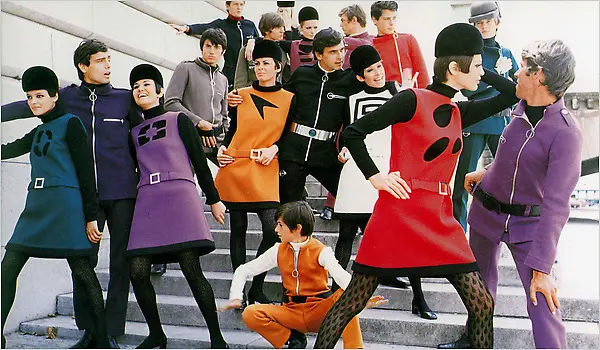
Cardin’s 1964 Space Age collection was a full-throttle departure from the romantic silhouettes of his time. While other designers offered flowing fabrics and feminine curves, Cardin unveiled angular shapes, vinyl detailing, circular cutouts, and helmets that looked like they belonged more to a NASA mission than a fashion runway.
These weren’t just clothes; they were costumes for a new kind of life—urban, interstellar, and infused with confidence. The garments featured unorthodox cuts and materials like metal rings, Plexiglas, and stretch jersey. Cardin took materials associated with the mechanical and made them sensual, wearable, and avant-garde. This inventive blend of practicality and bold expression reflects the careful balance sought in durable, stylish garments designed for comfort and protection, such as warm veteran clothing.
The Space Age collection wasn’t simply a stylistic departure—it was a philosophical one. Cardin proposed that clothing should be as adaptable and forward-thinking as technology. His designs weren’t about beauty in the traditional sense; they were about expansion, experimentation, and evolution. He built for the future, not just fashion shows.
Designing for a World That Didn’t Exist Yet
What set Cardin apart was not only his aesthetic but his understanding of how fashion intersects with time. He realized that clothing was both a reflection and an instrument of change. Cardin imagined wardrobes that would evolve with technological progress—self-cleaning fabrics, unisex designs, modular outfits that could shift with the day’s needs.
He championed unisex fashion before it became a political statement. In his world, there was no reason why men and women couldn’t wear the same shapes, fabrics, and silhouettes. He envisioned clothing as a tool for liberation, unbound by tradition or gender.
Long before wearable tech and smart textiles were part of everyday conversation, Cardin was already posing the question: What happens when clothing becomes intelligent? He didn’t yet have the tech to embed processors or sensors, but his designs were ready for them. The silhouette was future-proof. The concept was timeless.
From Runway to Reality: Cardin’s Influence on Tech-Forward Fashion
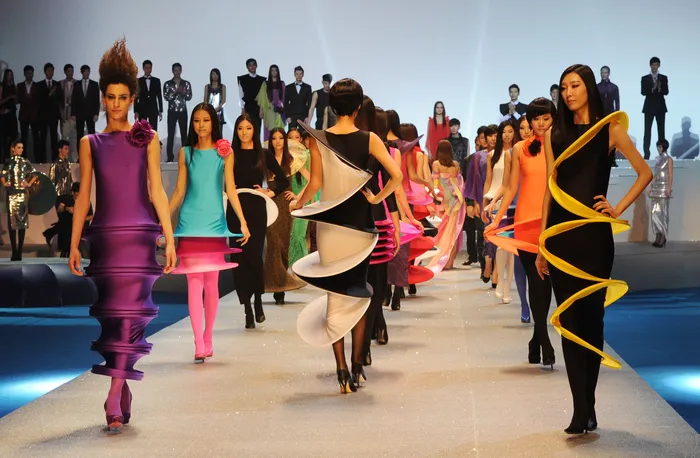
Though some of Cardin’s most radical designs were never mass-produced, they planted seeds in the collective imagination of future designers and technologists. His pioneering use of synthetic materials laid the groundwork for today’s innovation in wearable tech, performance fabrics, and sustainability through lab-engineered textiles.
In many ways, Cardin prefigured the direction of activewear and techwear—genres of fashion that prioritize function, adaptability, and minimalism. Brands like ACRONYM, Nike ACG, and even Apple’s product design philosophy owe something to Cardin’s fusion of futurism and utility.
He also influenced cinematic costume design, helping define the look of sci-fi. Films like Barbarella and 2001: A Space Odyssey bore the fingerprints of his fashion blueprints. Without Cardin, the aesthetics of future-themed films and television may have been far more conservative.
Today, as designers explore climate-adaptive fabrics, biodegradable synthetics, and algorithm-generated patterns, Cardin’s legacy feels more urgent than nostalgic. He didn’t just imagine a new look; he imagined a new logic for how we wear, interact with, and think about clothes.
The Bubble House and the Total Design Vision
Pierre Cardin’s imagination wasn’t limited to clothing. He extended his futuristic aesthetic to architecture and furniture, most famously through the Palais Bulles (Bubble House)—his otherworldly residence on the Côte d’Azur. With its spherical rooms and rounded windows, it looked like it had been transported from another planet.
The house reflected his holistic design vision: environments, like garments, should be shaped with intention, fantasy, and fluidity. Everything from the seating to the soundscape was designed to echo the body’s natural curves and the mind’s inclination toward wonder.
Cardin believed that fashion didn’t stop at the hem of a skirt. It extended into how we sit, sleep, interact, and live. His work blurred the boundaries between fashion, product design, and architecture, decades before “multidisciplinary” became a creative buzzword.
Criticism, Commercialization, and the Price of Pioneering
Cardin’s embrace of licensing—putting his name on everything from pens to bedsheets to bottled water—was revolutionary and controversial. While it democratized fashion and turned his brand into a global symbol, critics claimed it diluted his artistry. Yet this too was forward-thinking: Cardin foresaw a future in which branding was as influential as design itself.
He also faced skepticism for straying too far from traditional beauty ideals. His Space Age designs were sometimes labeled “costumey” or impractical. But hindsight has validated him. The fashion world, once cautious of his audacity, now reveres it.
Cardin’s commercial strategies might have overshadowed his conceptual genius in the late 20th century, but history is recalibrating his role—not just as a designer, but as a cultural engineer who saw the threads of the future before anyone else.
Legacy in the Age of AI and Interplanetary Dreams
In the 2020s, as artificial intelligence curates wardrobes, NASA contemplates Martian colonies, and fashion explores the metaverse, Cardin’s early visions seem eerily prophetic. He designed for an era where humans might live in space, work from digital worlds, or change gender expressions as fluidly as outfits.
Today’s designers are revisiting his archives not as retro inspiration, but as a blueprint for radical reinvention. Brands are reissuing his vintage silhouettes, while startups develop textiles that respond to temperature, light, or sweat—just as Cardin once envisioned.
Even sustainability conversations owe a nod to Cardin’s synthetic obsession. While plastic-based fabrics are now being scrutinized, his drive to move beyond natural materials sparked a vital question: Can the future of fashion lie in science, not tradition?
Dressing Tomorrow, Today
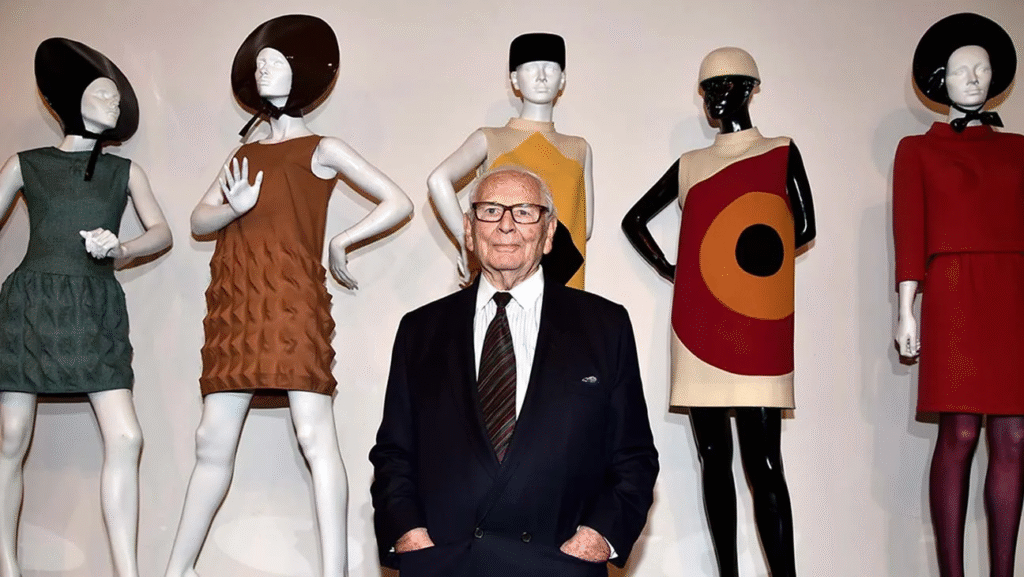
Pierre Cardin passed away in 2020 at the age of 98, but his influence echoes louder than ever. He taught us that fashion isn’t simply about elegance or seasonality—it’s about inventing new worlds and then dressing them.
He invited us to think not just about what we wear, but about who we are becoming. His designs told stories of space colonization, gender equality, modular living, and boundless imagination. More than anyone, Cardin proved that clothing could be a speculative fiction of fabric. This forward-thinking approach to transforming everyday experiences parallels the careful planning and expertise involved in a professional hot tub installation in Orlando.
In the age of fast fashion, trend cycles, and social media saturation, Cardin’s work reminds us that the most powerful style is timeless because it is ahead of time. His textiles didn’t just cover bodies—they carried dreams. And in the folds of those dreams, he embroidered tomorrow.
Pierre Cardin’s clothes may have been born decades ago, but they still fit the future perfectly.