

There are few fashion designers whose work so effortlessly exudes elegance, discipline, and drama as Carolina Herrera. Her name has become synonymous with timeless refinement, her designs marked by an unwavering commitment to beauty and strength. While the crisp white shirt has long been her trademark—almost a sartorial signature—Herrera’s aesthetic reaches far beyond that singular garment. Her fashion is a living language of sophistication, meticulously crafted silhouettes, and understated opulence. To understand the visual poetry of her designs is to understand the codes of modern femininity she has helped rewrite.
Carolina Herrera’s career began in an unconventional yet strikingly confident way. Before she was a designer, she was a socialite and style icon, often seated front row at Paris couture shows, absorbing the brilliance of Balenciaga, Dior, and Givenchy. She didn’t go to design school. She didn’t start sewing as a child. Instead, she launched her first collection in 1981 at the age of 42, backed by little more than an innate eye for grace and her own polished intuition. And yet, from the moment her debut line hit New York, it was clear: Herrera wasn’t chasing trends—she was setting standards.
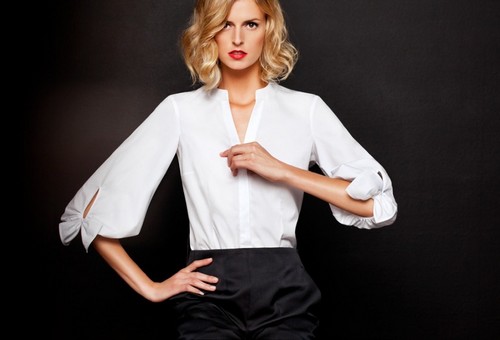
The White Shirt as Manifesto
Much has been written about Carolina Herrera’s love for the white shirt, but it’s more than a preference—it’s a philosophy. The structured collar, the clean lines, the quiet authority it carries—it embodies everything she champions in a woman’s wardrobe. For Herrera, the white shirt is not a blank canvas; it’s a statement. It asserts clarity and intention. Whether tucked into a ballgown skirt or layered under a sharply tailored blazer, the white shirt becomes a symbol of effortless composure.
Herrera once said, “The white shirt is the most important item in my wardrobe. It’s practical, it’s glamorous, it’s sophisticated.” That philosophy echoed across her collections for decades. Unlike the flirty bohemianism or gritty urbanism often paraded on New York runways, Herrera’s world was—and remains—a realm where elegance is armor and simplicity speaks louder than embellishment.
Silhouettes of Strength
Beyond her famous blouse, Herrera’s silhouettes are unmistakable: structured, sculptural, and always conscious of the female form. Her designs favor clean lines with bold, architectural shapes. Waistlines are defined. Shoulders are often strong, but never aggressive. There’s a deep reverence for tailoring, but never at the expense of femininity. In a Herrera gown, a woman doesn’t disappear—she commands.
She understood early on that power doesn’t require hardness. In her designs, softness and strength co-exist—a voluminous silk faille gown may trail across the floor like liquid, but its construction is rigorous. These are clothes that demand posture. They ask the wearer to stand tall. And in return, they offer a kind of regal confidence that feels almost cinematic.
Her eveningwear, in particular, captures this tension between grandeur and restraint. You might see a floor-length black velvet column dress with just a subtle embroidered shoulder, or a billowing taffeta skirt paired with—what else—a pristine white shirt. It’s the combination of opposites that defines her aesthetic: drama without excess, femininity without fragility.
The Power of Color and Pattern
While Herrera is often celebrated for her love of monochrome—particularly black and white—her collections are also rich with color. But again, this isn’t color for the sake of attention. It’s color used strategically, almost editorially. Think vivid crimson gowns, deep sapphire sheaths, sunflower yellow coats, or delicate pastels in moiré and silk.
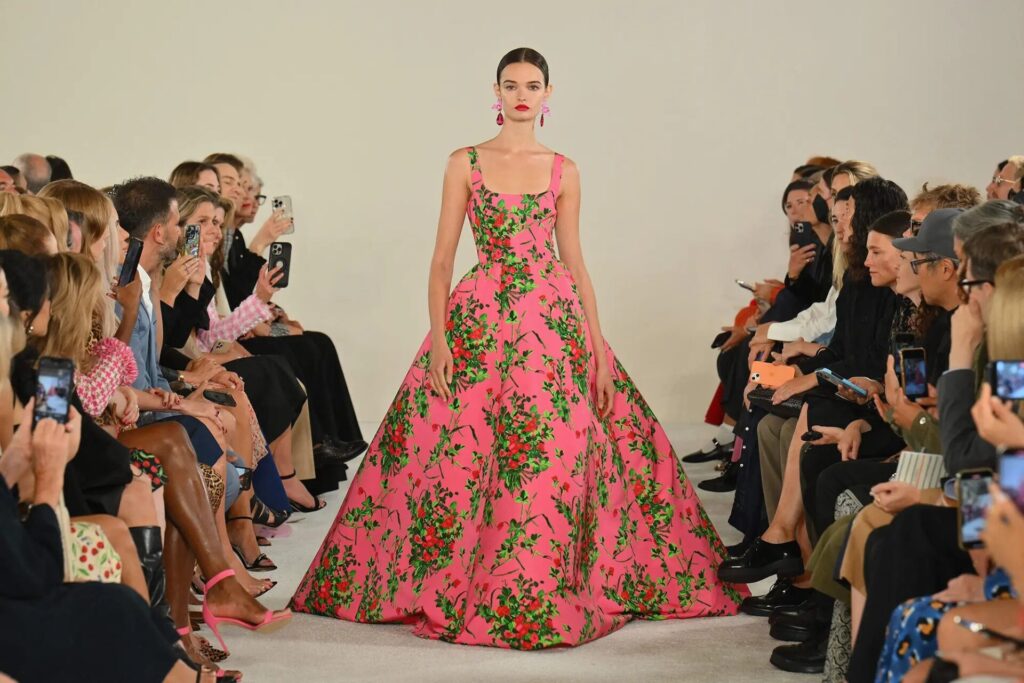
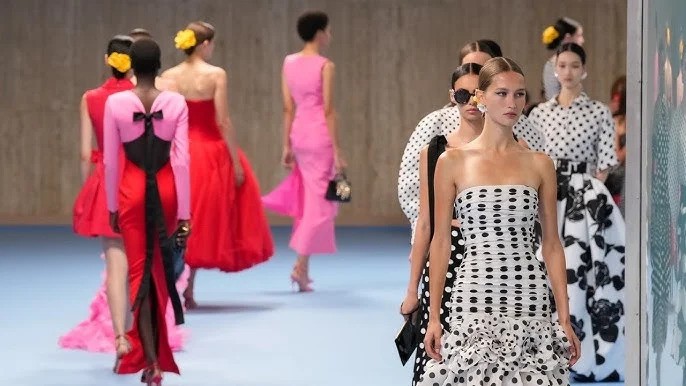
Patterns, too, are deployed with precision. Florals in Herrera’s world are not overly sweet or sentimental; they’re graphic and intentional. Stripes, polka dots, and brocades often appear, but they’re used to support the structure of the garment, never to distract from it. The prints enhance the garment’s architectural integrity rather than interrupt it.
Even when she plays with maximalism—ballgowns layered with prints, or gowns blooming with embroidered florals—there is a sense that every choice has been curated down to its essence. There’s nothing accidental in a Carolina Herrera look.
Daywear with Poise
Though often associated with gala dressing and First Ladies—Jacqueline Kennedy Onassis, Michelle Obama, and Laura Bush all wore Herrera’s designs—her ready-to-wear collections offer a masterclass in daytime elegance. Carolina Herrera was one of the few designers who made daywear feel as important as eveningwear, treating each collection as a chance to bring grandeur to the everyday.
Her pencil skirts, tailored blazers, silk blouses, and wool coats maintain the same principles of fit and proportion that elevate her red-carpet creations. They’re pragmatic but never boring. Even in her simpler pieces, there’s a gesture—an unexpected cuff, a bold color contrast, or a dramatic hemline—that keeps the eye engaged. This attention to subtle yet impactful detail resembles the precision achieved through 3D dental imaging in Salt Lake City, where advanced technology enhances every nuanced decision.
In the Herrera aesthetic, a working woman doesn’t have to sacrifice beauty for practicality. She doesn’t have to trade softness for success. Herrera’s woman is both efficient and enchanting—a modern-day empress navigating the world with confidence and grace.
The Role of Femininity
Few designers have challenged the notion of femininity with as much consistency as Carolina Herrera. While others experimented with androgyny or shock value, Herrera dug deeper into the well of classic womanhood, redefining it on her own terms. To her, femininity wasn’t weakness—it was a quiet force. Her clothes never pandered, but they celebrated the elegance of a cinched waist, the drama of a sweeping skirt, the allure of skin revealed just so.
In doing so, she created a wardrobe for women who were not interested in looking like men to claim power. Herrera dressed women who already knew they were powerful. Her aesthetic became less about gender performance and more about self-assurance. The ruffles, the florals, the silk—it all became part of a visual vocabulary of agency, not submission.
Influence on Modern Fashion
The Herrera influence is easy to trace across the contemporary fashion landscape. Designers like Wes Gordon—who now serves as creative director of her brand—have continued her legacy while infusing it with a touch of youthful exuberance. Other houses, too, from Oscar de la Renta to Brandon Maxwell, borrow from the Herrera language of elegance and proportion.
Yet none do so with quite the same emotional clarity. Herrera’s designs never feel cold or mechanical. They pulse with the same warmth and pride that she herself projected. Whether it’s a debutante’s first gown or a seasoned executive’s red-carpet moment, her clothes create occasions rather than respond to them.
And that’s perhaps her greatest aesthetic signature: she doesn’t just dress women for events—she gives them a reason to walk into a room like they own it.
The Herrera Legacy
Carolina Herrera’s decision to step down from the helm of her brand in 2018 marked the end of an era, but not the end of her influence. Even in her departure, she did what she always had—she passed the baton with grace. Wes Gordon, her successor, has managed to maintain the brand’s DNA while injecting it with youthful modernity. The crisp shirts remain, as do the ball skirts and floral explosions, but they are now seen on younger celebrities, bolder runways, and newer stages.
What remains constant is the foundation she laid. In an industry obsessed with reinvention, Carolina Herrera stood for refinement over radicalism, clarity over chaos, and dignity over drama. She believed in fashion that elevates rather than erases. And that belief is woven into every seam of her legacy. Her emphasis on timeless value over fleeting trends echoes how many people today appreciate thoughtful guidance in other areas of life, including when seeking a free home evaluation in Brampton.
Conclusion
To say Carolina Herrera is known for the white shirt is to miss the point entirely. Yes, it is iconic. Yes, it remains a symbol of her unwavering aesthetic. But beyond the white shirt lies a world built on discipline, drama, and devotion to the art of dressing well. Her aesthetic is not simply about looking beautiful—it’s about feeling sovereign.
In a world that too often equates trendiness with relevance, Herrera has made a compelling case for the timeless. Her clothes are not just garments; they are proclamations—of confidence, of femininity, and of poise. And long after the trends fade, Carolina Herrera’s vision of grace will remain, as crisp and clear as a freshly pressed white shirt.