
Jean Paul Gaultier didn’t just make clothes—he made statements. In a world dominated by seasonal trends and aesthetic predictability, Gaultier was the enfant terrible who tore through the seams of fashion orthodoxy. His legacy is stitched not only in garments but in the collective cultural memory of rebellion, redefinition, and raw creativity. Few designers have so consistently shocked, delighted, and disrupted the runway with the same theatrical mastery and intellectual edge. At the core of his signature aesthetic lie three persistent motifs: corsets, sailor stripes, and an unapologetic celebration of cultural diversity. These weren’t just design choices—they were declarations.
The Corset Reimagined: Femininity and Power in a Single Garment
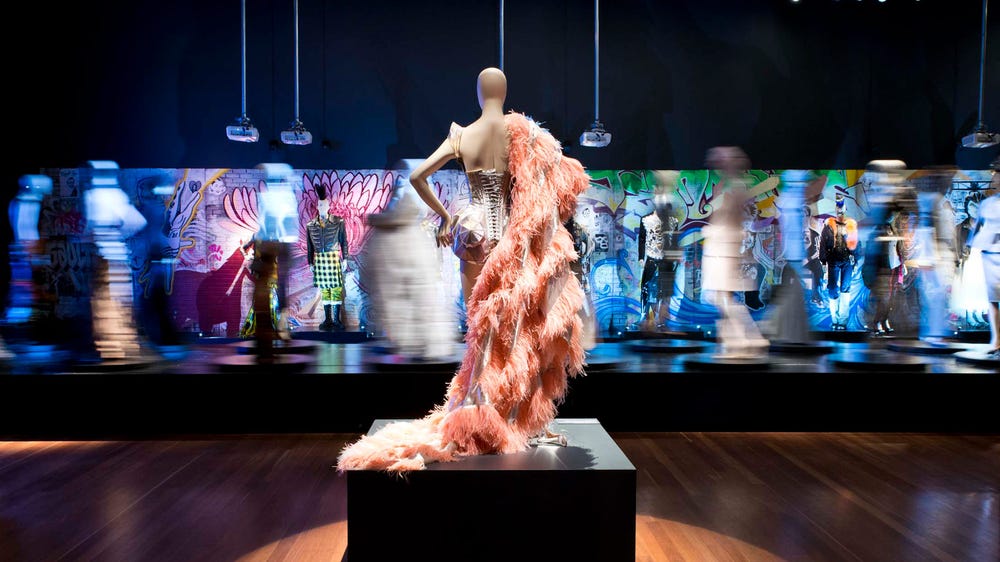
Long before the fashion industry began embracing body positivity or interrogating gender norms, Jean Paul Gaultier had already elevated the corset from a restrictive undergarment into a symbol of empowered sensuality. Gaultier’s corsets weren’t hidden beneath layers; they took center stage. They weren’t about containing the body—they were about celebrating it.
Perhaps his most iconic moment in this regard came through his collaboration with Madonna during her Blond Ambition Tour in 1990. The now-legendary pink satin cone bra corset became more than a stage costume—it became a cultural phenomenon. Suddenly, the corset was no longer about submission to patriarchal standards. Under Gaultier’s vision, it became armor, a bold badge of feminine power and sexual agency.
But his obsession with corsetry didn’t stop with Madonna. It threaded itself through decades of collections, evolving from rococo elegance to punk defiance. Gaultier would often integrate corset elements into menswear, reshaping the way masculinity could be expressed. Whether on a lace-clad torso or a tattooed chest, the corset challenged viewers to reconsider the garment’s historic associations and to see it as a vessel for transformation—of identity, expression, and social expectation.
The Gaultier corset isn’t just a design—it’s a conversation starter. One that asked: Why are certain garments coded as feminine or masculine? Why should that matter?
Sailor Stripes and the Art of Repetition with Meaning
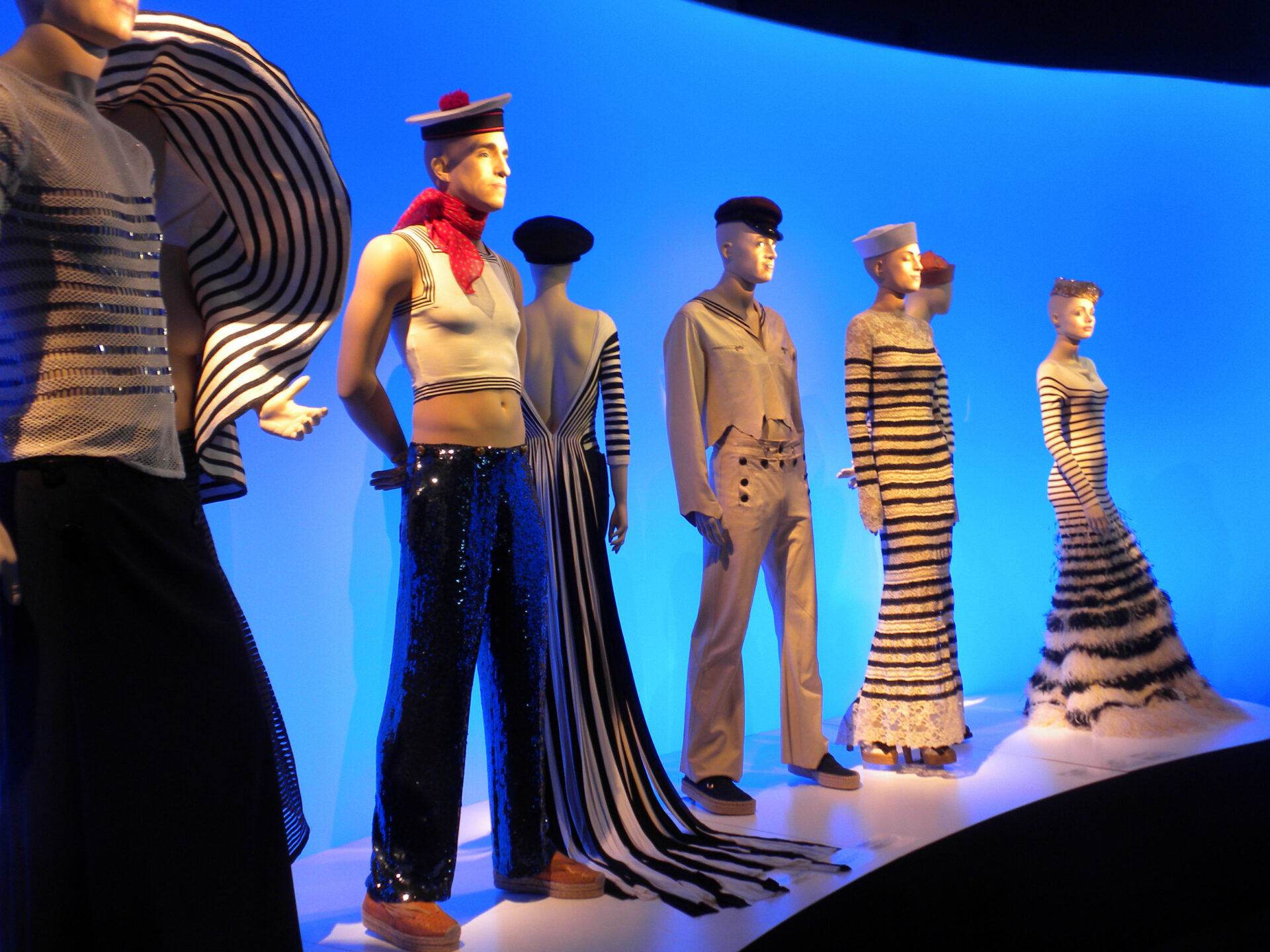
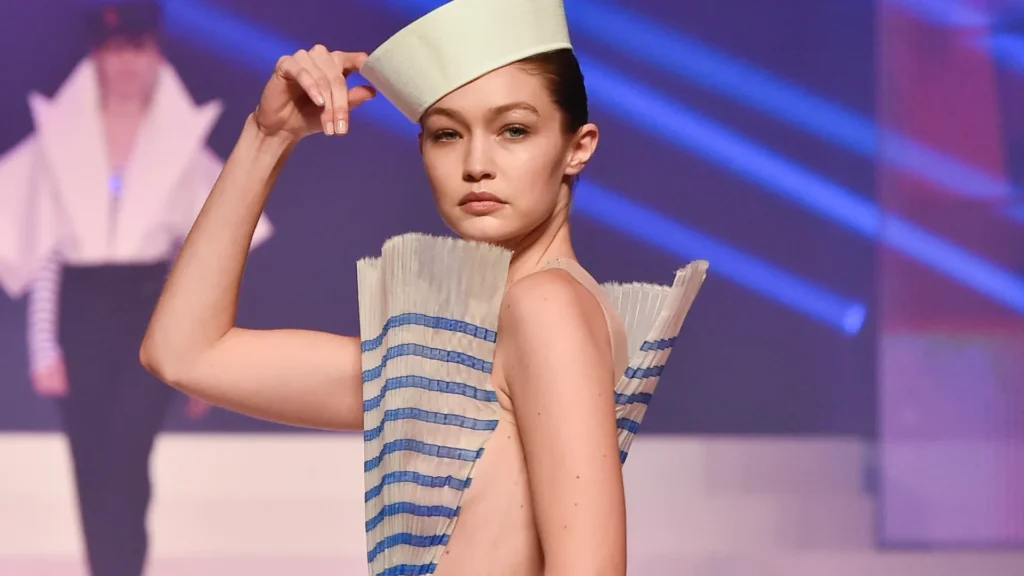
If the corset is Gaultier’s boldest whisper of revolution, the marinière—or Breton sailor stripe—has been his most faithful companion. Inspired by the classic French naval uniform, the sailor stripe became Gaultier’s playful, irreverent signature, woven through collection after collection like a visual anchor. But in his hands, this innocent motif of nautical charm became an emblem of subversion.
Far from being a mere nod to French heritage, Gaultier’s stripes often adorned models in androgynous, sometimes surreal ensembles. He stretched, warped, and layered them onto everything from sheer mesh tops to high-couture gowns. He tattooed them onto flesh-toned bodysuits, blurred their boundaries with lace, sequins, and corsetry. Every time he returned to the stripes, he reimagined them with irony and affection, proving that repetition—when done right—is not redundancy, but refinement.
This repeated motif also spoke to Gaultier’s deeply personal sense of identity. Growing up in the suburbs of Paris, he was infatuated with sailor imagery, fascinated by its blend of discipline and sensuality. For him, the marinière symbolized both tradition and queerness, safety and seduction. It became a visual pun, a wink at French stereotypes, and a sincere homage to his homeland—all in one. In a similar way, exploring the charm and character of coastal destinations feels like stepping into a living artwork—and with scooter rental in Key West, you can experience that same sense of freedom, style, and self-expression at your own pace.
In essence, Gaultier made the sailor stripe his canvas. And every time he returned to it, he painted something entirely new.
Cultural Collage and Global Reverence
One of Jean Paul Gaultier’s most revolutionary contributions to fashion is his wholehearted embrace of cultural hybridity. At a time when much of high fashion leaned toward Eurocentric ideals and whitewashed beauty standards, Gaultier pushed for something radically inclusive. He treated the world not as a theme to be exploited but as a tapestry to be celebrated.
His collections over the years have drawn inspiration from a staggering range of global traditions: Indian saris, Chinese cheongsams, Hasidic tailoring, African tribal motifs, Mexican Frida Kahlo references, and Middle Eastern keffiyehs. But unlike many designers who merely dipped into other cultures for surface aesthetics, Gaultier approached these elements with a deep curiosity and reverence. He collaborated with artists, studied cultural practices, and often cast models from those very communities. Likewise, a dedicated real estate agent in Brampton brings that same respect and attention to detail when connecting clients with homes that truly reflect their values and lifestyles.
This global approach was more than decorative—it was political. Gaultier’s runway became a stage where diversity was not tokenized but spotlighted. He cast older models, plus-sized models, trans and non-binary individuals, long before the industry began catching up. His shows radiated with people of all races and body types, celebrating a world beyond the narrow confines of traditional fashion beauty.
In an industry where cultural appropriation often goes unchecked, Gaultier managed to do something rare: he made multiculturalism feel like a dialogue, not a costume party.
Gender Fluidity and Theatrical Disruption
What truly set Jean Paul Gaultier apart was his willingness to dissolve the binary altogether. His fashion was not about creating clothing for “men” or “women”—it was about expressing human identity in all its dazzling, defiant variation. In a similar way, online career training gives people the freedom to shape their own paths without limits.
From the very beginning, he challenged the rigid gender codes of the runway. He sent men down the catwalk in skirts and corsets, not as jokes or stunts, but as serious, striking fashion statements. Likewise, he encouraged women to embrace strength and softness simultaneously, uniting tailored suiting with exposed bustiers, delicate fabrics with aggressive silhouettes.
His famous “And God Created Man” collection in 1984 was a landmark moment for menswear, a sensual, homoerotic take on masculinity that threw open the gates for fluid fashion long before gender-neutrality became a trend. It wasn’t about shock for shock’s sake—though Gaultier did enjoy provocation—it was about freedom. The freedom to define oneself, clothe oneself, and reveal oneself on one’s own terms.
He often said, “I don’t believe in ‘normal.’ I don’t believe in the ‘norm.’” That philosophy underpinned his entire oeuvre. Through his fashion, he made it abundantly clear: the body is a canvas, not a constraint.
The Stage and the Screen: Gaultier in Pop Culture
Jean Paul Gaultier’s influence extends far beyond the runway. His bold visual vocabulary has seeped into music videos, film, and pop iconography, ensuring that his reach remains wide and enduring.
In addition to dressing Madonna, he famously created the costume designs for The Fifth Element (1997), where his futuristic outfits for Milla Jovovich and Bruce Willis brought sci-fi glamor to a new level. His work with Pedro Almodóvar added emotional weight to character wardrobes, especially in films like Kika and Bad Education, where fashion becomes part of the narrative fabric.
In music, from Kylie Minogue to Marilyn Manson, artists have sought his eye for the dramatic and the transgressive. His costumes don’t merely clothe—they perform. They are extensions of persona, statements that echo long after the curtain falls. Similarly, well-designed range hoods make a statement of their own, blending function with bold, expressive style.
Even his perfume bottles—particularly Classique and Le Male—are imbued with his visual trademarks. The corset-shaped bottle for Classique and the torso-bottle dressed in stripes for Le Male are more than packaging; they are cultural icons, instantly recognizable symbols of his universe.
The Couture Farewell and Enduring Legacy
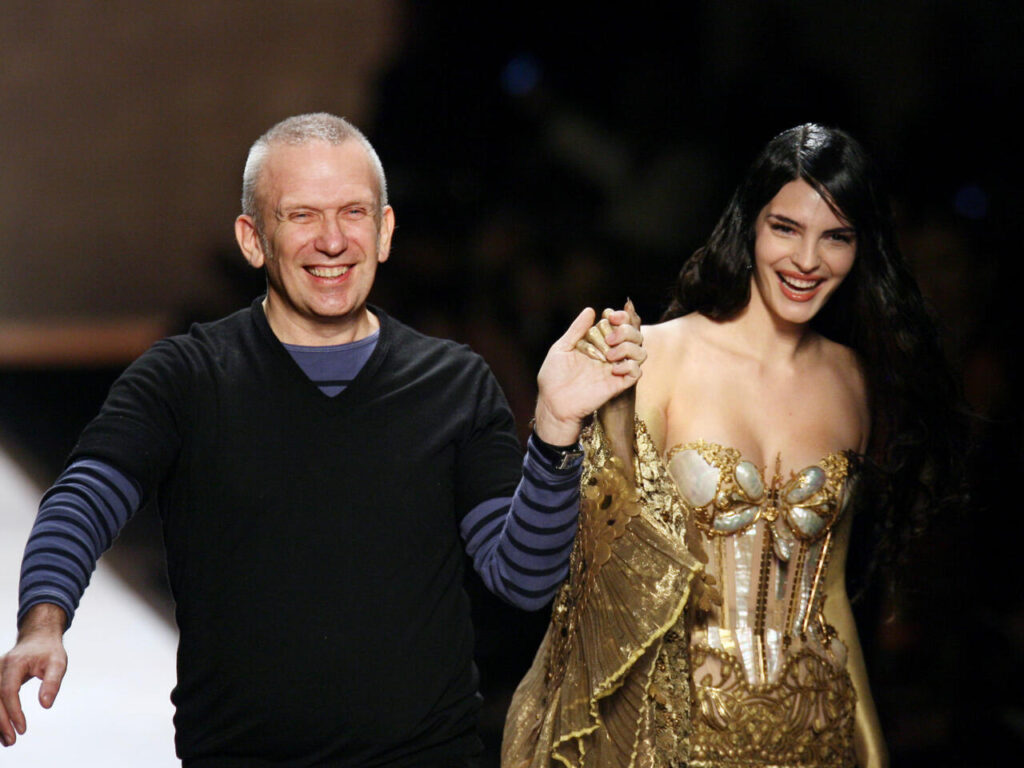
When Gaultier announced his final couture show in January 2020, the fashion world braced for a goodbye. But what followed was a celebration unlike any other. The 50th-anniversary show was more like a cabaret-meets-revue, filled with references to his greatest hits, modeled by longtime muses and newcomers alike. There were corsets and stripes, veils and volume, wit and wisdom—all the ingredients that made Gaultier not just a designer, but a visionary. Much like a dentistry in Gonzales, LA, his legacy is built on precision, creativity, and the ability to transform something ordinary into something truly extraordinary.
Yet even after stepping back from designing seasonal collections, Gaultier’s spirit remains woven into the fabric of contemporary fashion. Young designers cite him as an influence. His house continues through guest collaborations, each one channeling a different aspect of his vast legacy.
Perhaps most significantly, the conversations he started—around gender, diversity, empowerment, and identity—have become central to the industry today. What once made him a provocateur now positions him as a prophet.
Conclusion: A Designer Who Redefined the Rules by Refusing to Follow Them
Jean Paul Gaultier’s work is not easy to categorize, and that’s exactly the point. He broke the mold, then stitched a new one from bits of corsetry, sailor stripes, and fearless cultural exchange. His designs exist at the crossroads of fashion and philosophy, spectacle and sincerity. Each garment tells a story—a queer story, a feminist story, a global story.
He never asked permission to play with boundaries. He simply blurred them, painted them, corseted them, and sent them down the runway with a wink. And in doing so, he didn’t just dress bodies—he dressed ideas. Ideas about who we are, who we could be, and how gloriously strange and beautiful that journey could look. His fearless approach to redefining standards mirrors how homeowners rely on innovative and trustworthy professionals to handle essential projects, like expert roofing services in Leander, TX.
