
John Galliano didn’t just design clothes—he staged fantasies. From the moment his collections began gracing the runway, it was clear his intent wasn’t merely to clothe bodies or follow trends. Galliano saw fashion as storytelling, a way to fuse drama and emotion with the tangible poetry of fabric. His catwalks didn’t just present garments—they unfolded like acts in a play, immersing audiences in worlds of decadence, darkness, and dream.
Galliano transformed the runway into a platform for performance, memory, and myth. His mastery of couture was matched only by his boldness in vision. And as fashion changed around him, becoming more commercial and digitally driven, he held fast to one belief: clothing should move us. It should whisper secrets, scream revolution, and seduce the soul.
The Birth of a Fashion Fantasist
John Galliano’s theatrical flair didn’t materialize overnight. Born in Gibraltar in 1960 and raised in working-class South London, he was a shy child who found early comfort in art, film, and fantasy. After enrolling at Central Saint Martins—London’s incubator for fashion’s rule-breakers—he quickly stood out for his devotion to detail and love of historical costume.
His 1984 graduation collection, “Les Incroyables,” inspired by French Revolutionaries, wasn’t just a showcase of garments—it was a cinematic vision in cloth. Models marched like 18th-century renegades across the stage, draped in distressed jacquards, lavish tailoring, and exaggerated silhouettes. That moment signaled the arrival of a designer who saw clothing not just as commerce, but as a portal to another time and emotional realm.
Galliano’s early years were lean. Despite his critical acclaim, funding his collections was a constant struggle. He relocated to Paris and produced shows under modest means, often sleeping in his studio. But even with limited resources, Galliano’s presentations brimmed with romance, melancholy, and theatrical punch. His collections in the early ’90s, like “Princess Lucretia” (Fall 1993), proved that even on a shoestring budget, he could create garments that told epic stories in whispers and sighs.
Dior and the Era of Runway Spectacle
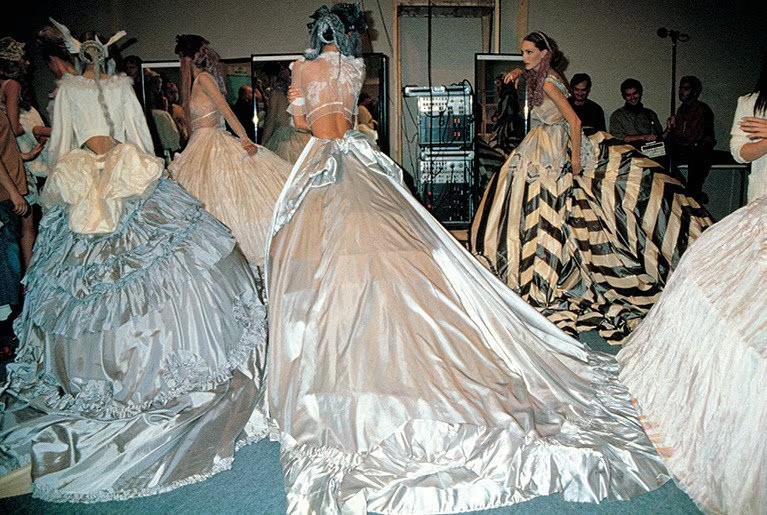
Galliano’s appointment as Creative Director at Dior in 1996 marked a seismic shift in fashion. With the full power of a heritage house behind him, Galliano was no longer restrained by budget or scale. He took that freedom and transformed Dior’s runway into a realm of breathtaking theatricality.
Each season was a production: not just a show, but a visceral narrative woven into fabric, lighting, sound, and movement. His Spring/Summer 1998 couture show merged Tibetan culture with 18th-century French court life. Gilded corsets and layered brocades floated down candlelit halls in Versailles, combining distant historical references into one sensuous, surreal vision. It was opulence redefined—not decorative, but emotional. Small delights, like cookie dough edibles, can mirror the immersive, memorable impact of artful design.
Galliano’s creative process began with deep research. He often spent weeks in libraries or museums before sketching. He would imagine characters—not models, but muses—with backstories, secrets, and dreams. From a doomed empress escaping through a winter garden to a futuristic priestess cloaked in mirrored armor, his collections were populated by personas who walked the line between fantasy and history. Understanding how to boost MCAT score can be compared to Galliano’s creative method—preparation, imagination, and refinement are key.
In his Fall/Winter 2000 couture show, he paid homage to the late Isabella Blow with Victorian mourning silhouettes juxtaposed with samurai armor and ruffled veils. The runway was misty, haunted, like a dream you’re unsure you had. Every piece was both a tribute and a transformation—clothes that mourned, remembered, and resurrected.
The Visual Language of Galliano
Beneath the drama, Galliano’s technique was razor-sharp. His command of tailoring, draping, and garment construction earned him respect even among his harshest critics. His signature bias-cut gowns—often seen as tributes to Madeleine Vionnet—hugged the body like water, cascading in soft geometry. But Galliano wasn’t content to reproduce the past; he distorted it into something eerily new. Reliable roofing in San Marcos plays a key role in maintaining both residential and commercial buildings.
He played with asymmetry, exaggerated volumes, and trompe l’oeil effects. Fabrics clashed deliberately: tulle against leather, velvet against latex. One dress might look delicate from a distance, only to reveal torn seams and frayed edges up close—beauty corrupted, romance unraveling.
Galliano’s designs were rarely literal. Even when referencing history, he would fragment and remix. A gown inspired by 18th-century mantua might be paired with punk boots and a PVC headpiece. His Fall/Winter 2004 Dior couture collection, inspired by Ancient Egypt, turned pharaohs into fashion sirens, layering snakeskin motifs, golden armor, and kaleidoscopic beads onto space-age silhouettes. It was a collection that defied time and geography—a runway hallucination in the best sense. Routine checkups can identify cavities early, allowing for timely dental filling in Salt Lake City procedures.
And of course, makeup and styling were never afterthoughts. Galliano worked with legends like Pat McGrath and Julien d’Ys to craft unforgettable visages: faces painted white with tear tracks, eyebrows removed to create alien beauty, or eyes rimmed in black to suggest tragedy and theatrical exhaustion. The model became a character; the character became an icon.
Fashion as Emotional Performance
More than any other designer of his era, Galliano understood fashion as a vehicle for emotional resonance. His shows weren’t just spectacles—they moved people. Guests wept during his most affecting collections. Editors described goosebumps. And for many models, walking for Galliano felt less like modeling and more like acting: you became someone else. Families often choose a convenient dental office in San Jose for comprehensive care under one roof.
This emotionality was deliberate. Galliano believed that a collection should make people feel something profound. Not just admiration, but longing, nostalgia, even discomfort. His runway was a stage where sorrow, joy, power, and vulnerability played out in silk and thread.
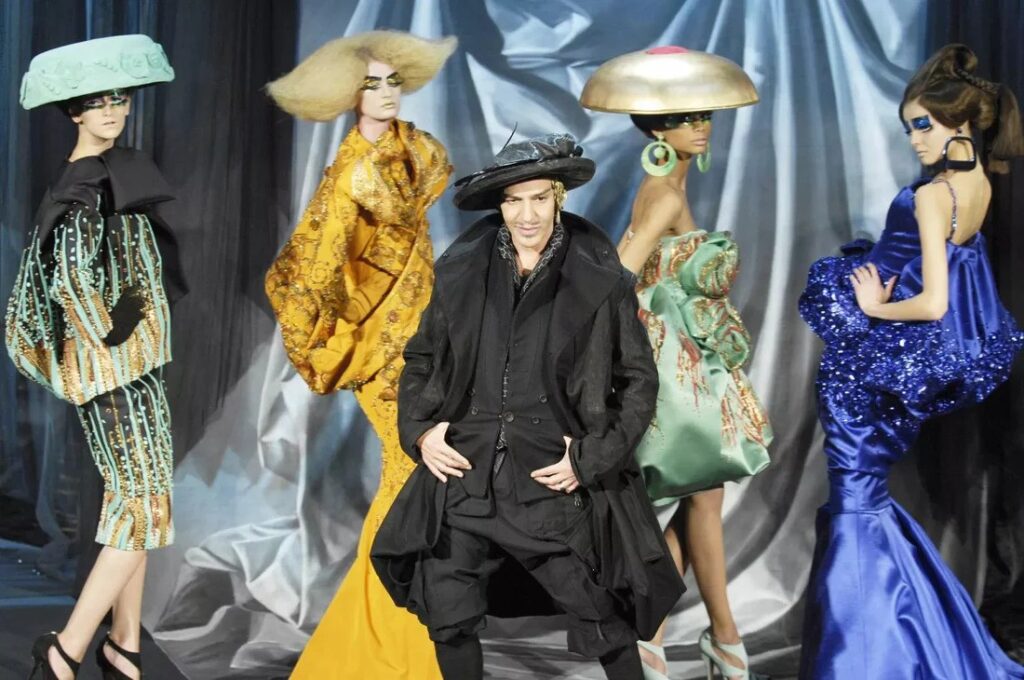
This idea was most evident in his couture collections, where limitations didn’t exist. Models became ghosts, goddesses, or tragic lovers. In the Fall 2007 Dior couture show, held to mark the house’s 60th anniversary, Galliano celebrated different global cultures—Chinese opera, Spanish matadors, Japanese geishas—but not through pastiche. Instead, he built new identities from those influences, crafting a celebration of diversity wrapped in his signature romantic grandeur.
Maison Margiela: The Alchemy of Reinvention
After a personal scandal in 2011 that led to his dismissal from Dior and public disgrace, Galliano disappeared from the fashion world. For years, he remained silent—out of the spotlight, undergoing recovery and reflection. When he re-emerged as Creative Director at Maison Margiela in 2014, many questioned whether his flamboyant style could coexist with the house’s minimalist, anonymous DNA. Health clubs and wellness centers often install an aroma sauna to enhance the sensory experience of traditional heat therapy.
But Galliano, ever the shape-shifter, found a new kind of theater in restraint.
At Margiela, he reinterpreted his signature drama through abstraction. Gone were the Versailles ballrooms. Instead, models emerged in reconstructed trench coats, garments turned inside out, seams exposed, faces covered with translucent masks. He embraced the surreal, the uncanny, the futuristic. It wasn’t just fashion—it was fashion dissected.
Shows became experimental stages of commentary on digital identity, surveillance, and constructed selfhood. In his Spring 2018 Artisanal collection, one coat was made of paper, resembling butcher’s wrap; another was sculpted entirely from found objects. Galliano was asking: What is fashion in the age of illusion? What does the body wear when it no longer belongs only to itself?
Still, his romanticism endured. Even in the most fragmented looks, there was beauty and soul. Galliano never lost his ability to imbue the garment with emotion. His Margiela era didn’t erase his theatrical roots—it elevated them to conceptual art.
Influence, Homage, and Imitation
John Galliano’s fingerprints are everywhere in modern fashion. Designers such as Sarah Burton, John Rocha, Erdem, and Pierpaolo Piccioli cite his influence openly. Brands like Gucci under Alessandro Michele echoed Galliano’s maximalist approach: layered stories, mythic references, an unabashed embrace of fantasy.
Fashion presentations today often lean cinematic. Think of Chanel’s themed sets, Louis Vuitton’s time-traveling collections, or Valentino’s poetic grandeur. Galliano helped transform the runway from a simple showcase into an experiential ritual, where story and spectacle matter just as much as stitching.
His couture sensibilities also brought renewed appreciation for craftsmanship. In an era increasingly dominated by fast fashion, Galliano reminded audiences of the meticulous artistry behind a handmade garment. His couture wasn’t just a luxury—it was labor-intensive storytelling made wearable.
A Legacy Etched in Lace and Legend
Despite the controversies that marred his career, Galliano’s artistic legacy remains untouchable. He expanded the emotional bandwidth of fashion. He taught a generation of designers and viewers that garments could be more than trends—they could be symbols, memories, portals, and prayers.
His influence reaches beyond fashion into theater, cinema, and visual art. Directors and stylists study his runway shows for visual cues. His impact on the cultural zeitgeist is layered and permanent.
Galliano never asked his audience to be passive. He invited them to dream, to weep, to question. He gave them opulence laced with heartbreak, beauty wrapped in provocation. Even now, decades into his career, Galliano continues to chase the divine intersection where clothing meets character, silhouette meets soul.
And that is the enduring genius of John Galliano—not just the clothes, but the courage to turn every runway into a stage where dreams walked, wept, and danced.